
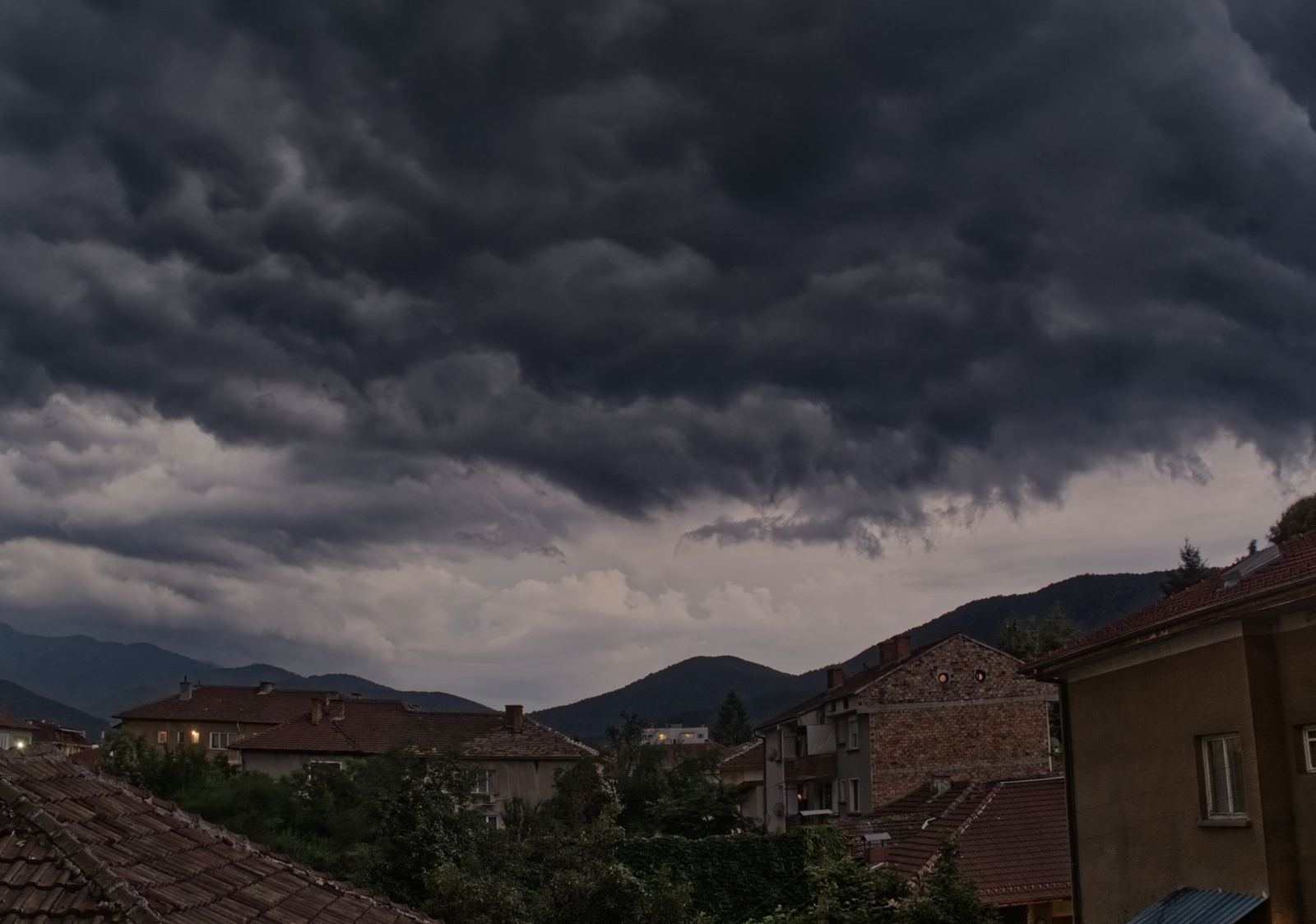
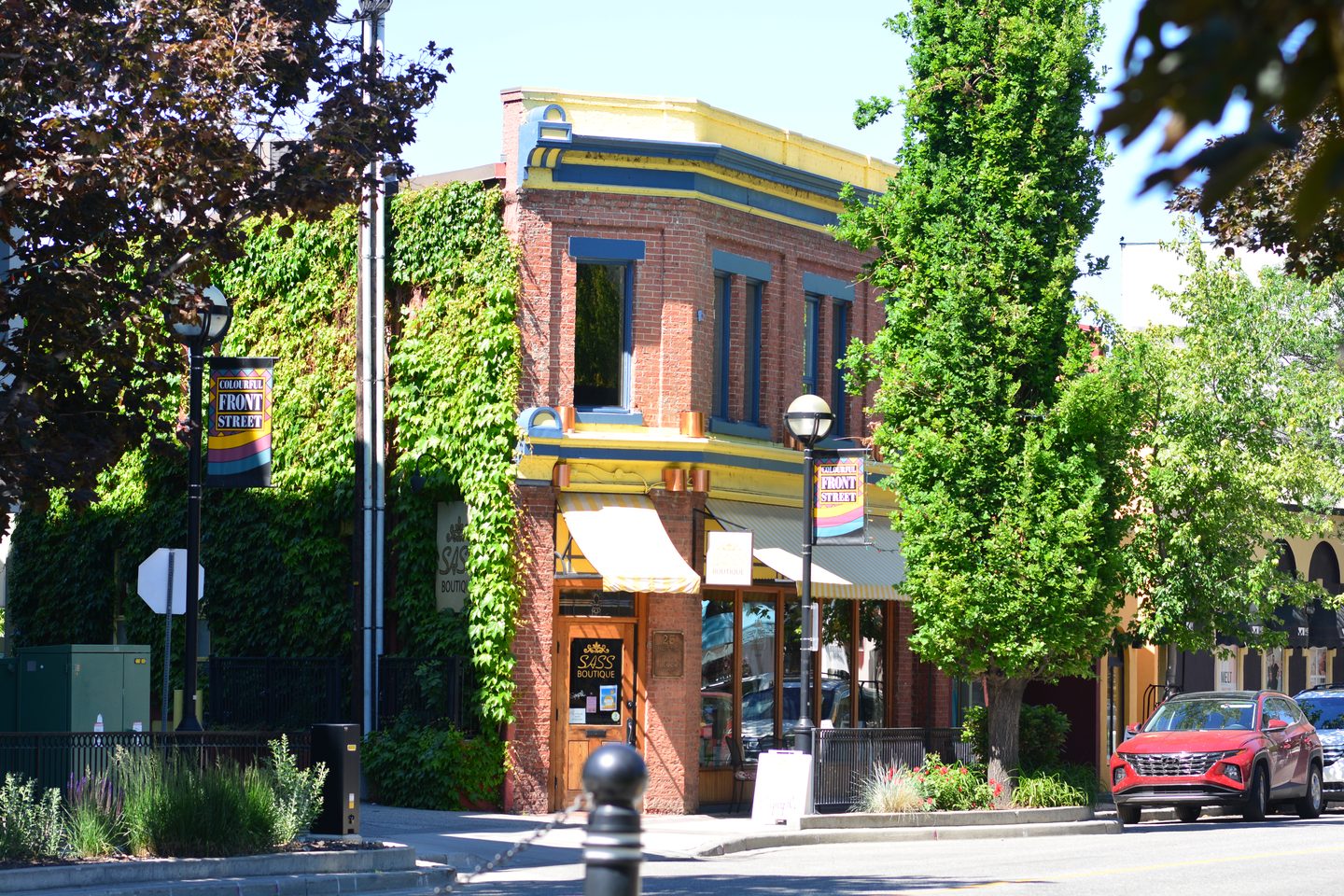

Grid houses toward the lake
North of the downtown blocks, the streets are a regular grid of detached houses. Most roofs are asphalt, with a chimney and a gutter that was added to a house that has been here for decades. A lower porch roof or a carport tied into the wall is where water shows up while the main slopes still look even.
Some houses have a second layer of shingles over the first. The edge looks thick above the gutter. If you can see that thickness from the sidewalk, say so. Covering a tired roof with another layer is a different job from replacing it, and the boards underneath decide which one is possible.
A house that faces Lakeshore and a house two blocks inland should not be described the same way. The water streets take more wind. The inland streets take more shade from boulevard trees. Name the one you have.
Sun on the valley floor
Penticton summers are hot. The south slope of a grid house bakes, loses its granules, and curls at the tabs. The north slope can still look acceptable. You can see this from the lane. Say which slope is pale.
Winter is mild until it is not. A cold week leaves ice at the eaves of houses with warm attics. The stain is a line along the outside wall. A circle in the middle of a bathroom ceiling is the vent boot, not ice.
Boulevard trees drop leaves into the gutters every fall. An overflowing trough runs down the siding and shows up inside as a leak. Look in the gutter from the ground. If it is packed, empty it and watch the next rain before you assume the shingles are finished.
What the roofer needs
Say Main North and the street so the stop is not treated as a hillside job. These yards are flatter. A ladder usually stands on the lawn or in the lane. Say if a hedge or a parked car blocks that side.
Describe the ceiling. Circle, streak by the chimney, or a line where an addition meets the house. Those three are the common openings on these blocks.
If the shingles are pale and the grit is in the downspout, the slope is near the end of its life. If they are dark and only one spot is wet, say one spot. Both are common on the same street.
Add a rough age and whether the wet side faces the lake. Photos of the eave and the ceiling, taken from the yard and the room, are plenty. Leave the ladder work to the visit.
This part of town
Lakeshore Drive is the edge. The numbered streets and the avenues behind it are calmer. If your bedroom faces the lake path, wind and a lifted edge are plausible. If your bedroom faces the lane, look at the garage valley and the tree in the lane instead.
Many of these houses have a bathroom fan that barely reaches the outside. A hose that stops in the attic dampens the underside of the roof and shows up as a stain that does not match any shingle. If you have been in the attic and the fan hose is loose, say so. That is not a reason to strip the south slope.
Lane garages share a drip line with the fence. A full gutter on the garage soaks the fence and the siding of the house. Say if the wet wall is the lane wall. It may be the garage trough, not the house roof.
Front Street and the avenues near the lake park fill with cars in summer. If your eave is on that busy side, say the street is crowded and the lane is the quiet side. The work goes better from the lane when the front is a parking lot.