
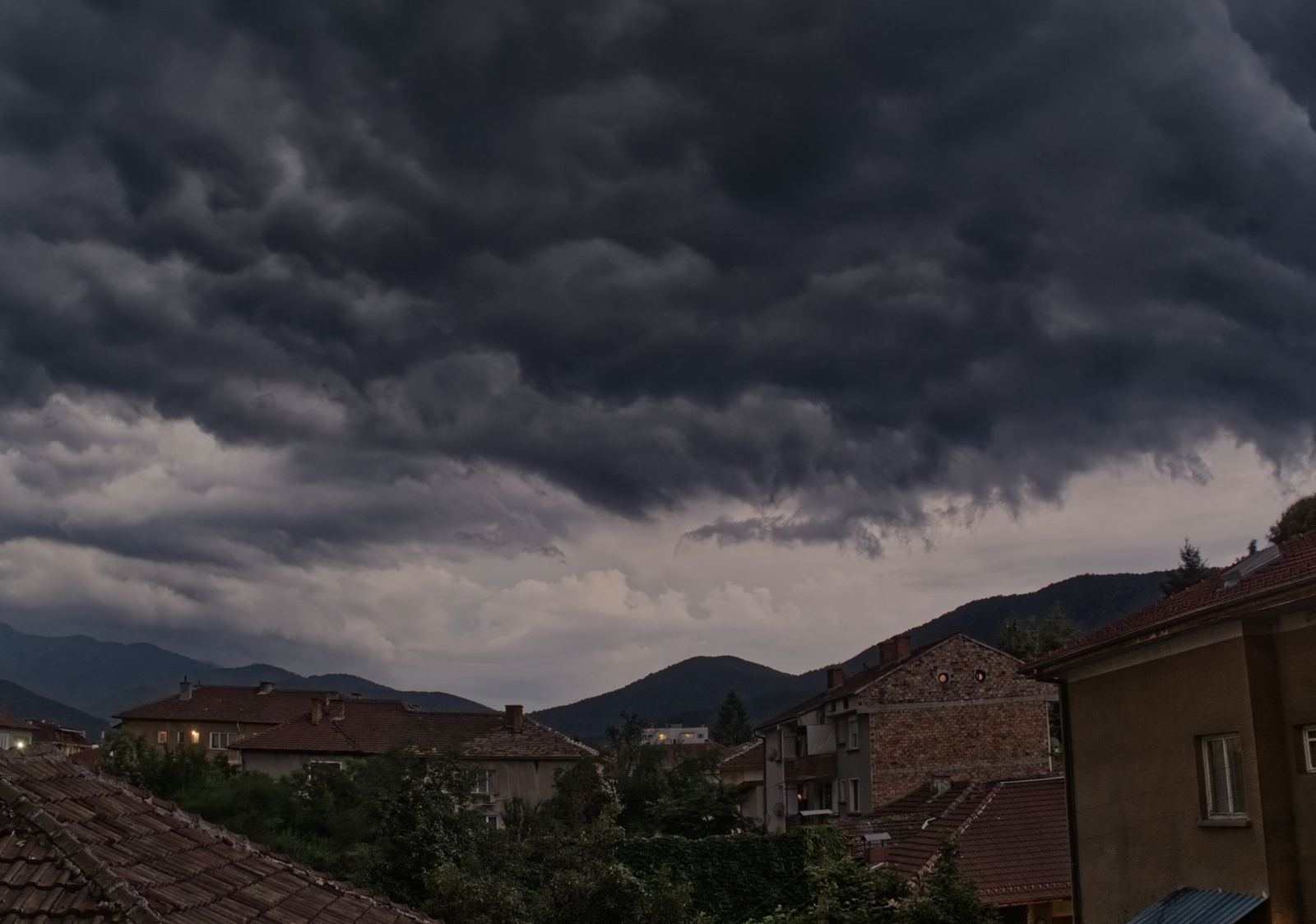
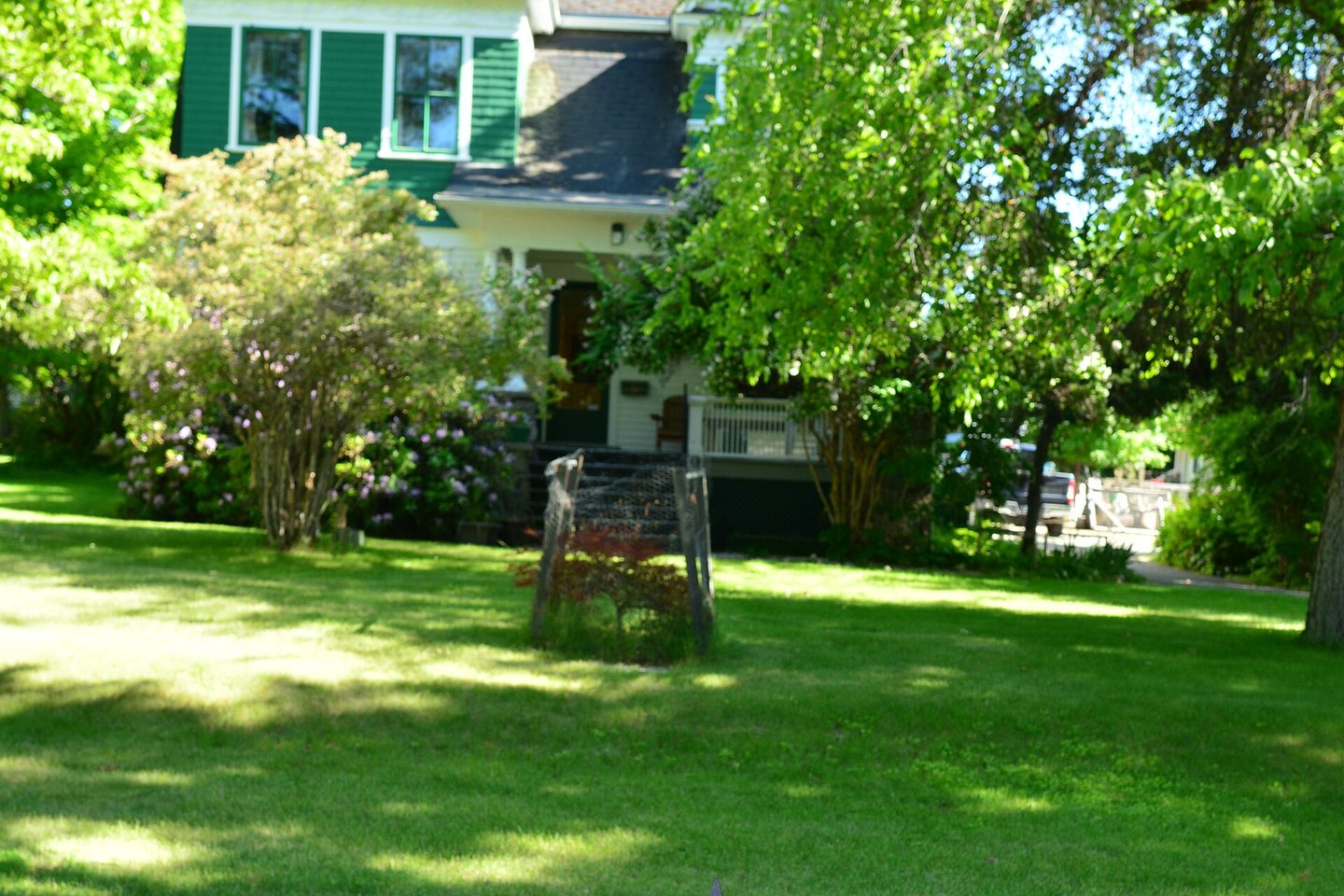

Older houses near the middle of town
These streets are part of the older grid, close enough to Main that the lots are modest and the houses have been lived in for a long time. Roofs are asphalt. Many still have the original brick chimney. The metal that should lap the brick pulls away, and the stain runs down beside the fireplace.
Porches were often closed in later. The low roof over that porch meets the old siding, and the flashing there is a strip of metal that has been painted and patched. If the front room is the wet one, say porch. The main gable may be fine.
A thick edge at the gutter can mean two layers of shingles. Say if the edge looks bulky. The person on the roof needs to know that before they price a cover-over that the boards may not want.
Sun, trees, and a quiet wind
Wind is not the West Bench wind. The damage you can see from the sidewalk is sun: pale tabs, curled corners, grit in the trough. Shade from a street tree keeps one slope darker and, in spring, a bit mossy. Name the pale slope and the shaded slope separately if both are on your house.
Leaves, not pine needles, are the usual gutter problem, unless a pine was planted in the yard. A packed gutter overflows and marks the ceiling at the outside wall. Empty it once and see if the mark returns. If it returns on a clear gutter, the roof is letting water through.
Ice shows up in a hard cold week, along the eave, on houses with warm attics. It is not an every-winter event the way it is in a snow town. Mention it if you saw a ridge of ice over the wall that later stained.
How to describe it
Use the street name you live on. Columbia and Duncan are neighbours, and the roof is still a particular house. Add a rough age. If you know a bathroom or a kitchen was renovated and the roof was not, say that. A new ceiling can hide an old leak until the stain comes through the fresh paint.
Tar around a chimney or a vent means someone already tried a patch. Say tar. It tells the roofer the leak has a history and the smear did not finish it.
Lanes and small yards are normal here. Say if the wet wall faces the lane, where a garage roof may be involved, or the street. A ladder in the lane is a different morning from a ladder in a fenced yard.
Bring the wet room, the look of the shingles, and a photo from the ground. Stay off the roof. The visit can start from those three things.
This part of town
Duncan Avenue and Columbia are close enough to share a weather pattern and far enough that the house still needs its own street. Give the one on your mailbox. Corner lots take sun on two faces and wear both. A mid-block house wears the south face and keeps the north face in the neighbour's shade.
Old brick chimneys on these streets were built with the house. The cap cracks, the mortar sands off, and the step flashing slides down. A streak on the ceiling beside the fireplace, plus grit on the hearth from the chimney, is masonry and metal, not a failed field of shingles. Say hearth if you have found that grit indoors.
Basement suites are common. The person who sees the stain may not be the person who can approve the work. Say if you are the owner or the tenant, and whether the attic hatch is reachable today. The description of the leak does not have to wait on that, but the visit does.
Window wells and basement suites sit under the drip line. A gutter that overshoots the well wets the suite wall. Say if the stain is in the basement suite and the gutter dumps at that corner. The opening may be the trough, not the shingles.